
Posts

Personalized onboarding: How to build a better welcome for new hires

What is personalized onboarding?

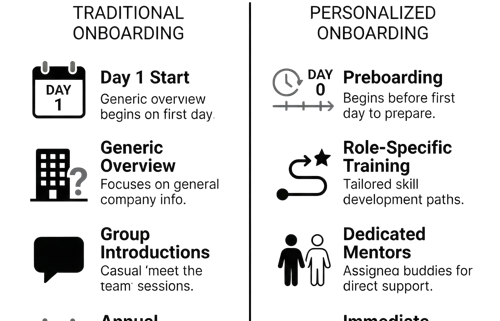
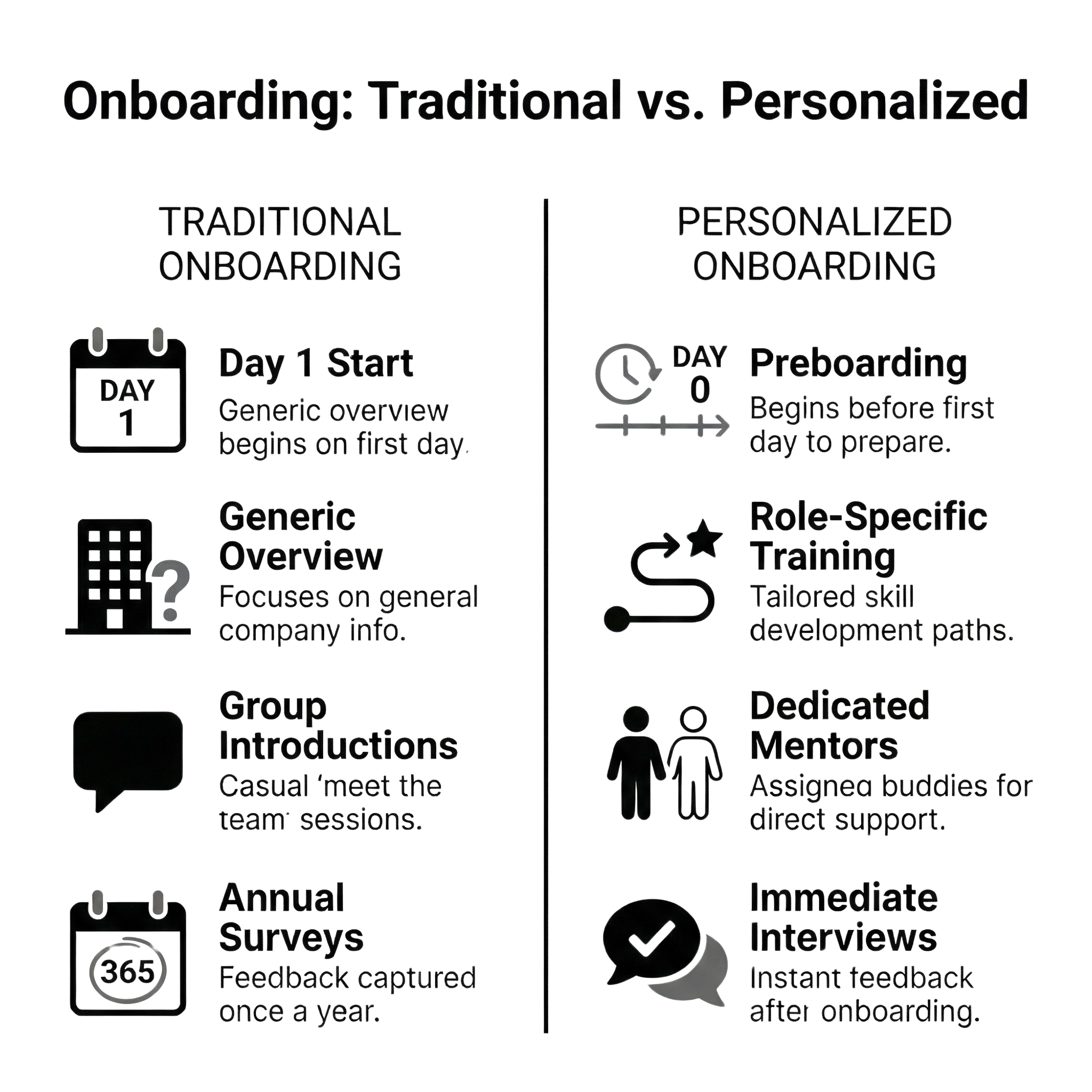
Personalized onboarding is the process of tailoring the first phase of employment to a new hire’s specific role, learning style, and social needs. Instead of a one-size-fits-all approach, it uses preboarding, role-specific training, and mentor integration to ensure employees feel prepared, valued, and culturally aligned from day one.

Need to know

  • The Disconnect: Only 12% of employees feel their organization does a great job with onboarding.
  • Preboarding is Essential: Start the process before Day 1 to reduce anxiety and signal professionalism.
  • Manager Involvement: Personalization fails without active check-ins and structured manager participation.

Feedback Loops: Use immediate post-onboarding surveys to iterate and improve the process.

Why does personalization matter in the hiring process?

A one-size-fits-all program rarely addresses unique job requirements or learning preferences. Personalization strengthens onboarding by ensuring employees receive relevant information and meaningful connections from the outset.

The data supports the need for a shift:

  • Only 57% of organizations preboard all new employees (Association for Talent Development).
  • Only 29% of employees feel fully prepared to succeed after their initial onboarding (Gallup).
How can you start personalizing onboarding today?

To transform a “check-the-box” activity into a strategic advantage, focus on these five pillars:

  • Early Engagement (Preboarding): Reach out before the first day. Share the “small” details—where to park, where to get coffee, or, for remote team members, how to order a standup desk – reduce first-day uncertainty.
  • Role-Tailored Content: Speak with current employees to find out what info they lacked when they started. Tailor training materials to support specific role success.
  • Active Manager Participation: Require managers to hold scheduled check-ins, specifically at the end of the new hire’s first day.
  • Social Integration: Assign “buddies” or mentors to help the new hire navigate company culture and build workplace relationships.
  • Continuous Feedback: Don’t wait for an annual survey. Measure the success of each new hire while the experience is fresh.

FAQ: People Also Ask

Who should be in charge of the onboarding process? Confusion over ownership is a major fail-point. Direct managers must be active participants (beyond what HR does) to ensure the social and role-specific aspects of the transition are successful.

When should the onboarding process actually begin? Onboarding should begin the moment the offer is accepted. Preboarding allows the employee to handle administrative tasks and logistics early, so their first day can be focused on culture and connection.


How often should I survey new hires about their experience? Don’t wait for an annual review. It is best to solicit feedback through a survey, immediately after the onboarding phase to capture real-time insights while the experience is fresh.

The Next Step After Conducting an Employee Survey: Turning Results into Action

Every year, millions of employees are asked to fill out surveys. They share their opinions on everything from organizational culture to feedback on their direct supervisor to what training would help them do their job better. But a crucial question often goes unanswered: Does this feedback actually lead to change?

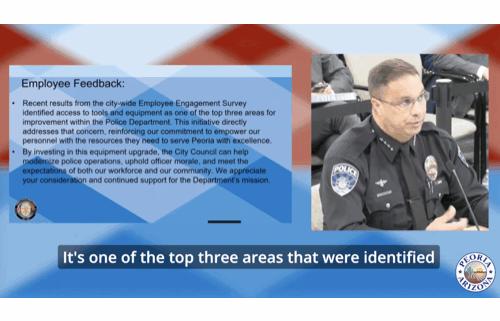
The answer is perfectly illustrated by Peoria, Arizona Police Chief Thomas Intrieri during a recent city council meeting. He was making the pitch for additional funding for the police department and cited how their employee survey found that officers were concerned about equipment. His use of the data to make his point and drive home support from policymakers is a testament to the principles recommended by organizational leadership experts and researchers.

Instead of relying only on anecdotes, Chief Intrieri presented hard data from an employee engagement survey. He pointed to a specific finding, noting that the equipment he was seeking funds for was among the top three concerns expressed by employees. Good staff work and the forethought to have done the employee survey led to a 7-to-0 yes vote for the $884,192 budget adjustment.

Why This Is a Textbook Example of Effective Leadership

It Proves to Employees That They Were Heard

The single most important outcome of a survey is for employees to know their feedback wasn’t ignored. By bringing the item before the city council and publicly citing the survey results, the Chief showed every officer in his department that their collective voice was the foundation of his request. This is the first and most vital step in building trust.

It Turns Subjective Wants into Objective Evidence

A leader’s request for “better equipment” can be dismissed as a routine departmental wish. But a request based on a formal, organization-wide survey becomes a business case – informed by data. It provides decision-makers (like a city council or a management team) with objective evidence to justify allocating funds and making a change.

It Creates a Positive Cycle of Improvement

When employees see a direct line between the feedback they gave and a positive change in their workplace, they become more invested in the organization’s success. They are more likely to participate thoughtfully in future surveys, which provides leaders with even better data. This creates a powerful loop: employees give quality feedback, leadership acts on it, and the organization gets better as a result.

The alternative: It’s easy for employees to feel like their feedback goes into a black box. This can lead to distrust in the process and diminishing response rates to future employee surveys. Don’t let this happen in your organization.

Frequently Asked Questions About Employee Surveys (FAQ)

Q1 Why should an organization conduct an employee survey?

Organizations use surveys to get an honest, confidential look at what’s working and what isn’t from the employees’ perspective. It’s one of the most effective ways to identify hidden problems, measure morale, and find opportunities to improve the workplace. Hint: Using an independent research firm gives assurance to employees that their responses will remain anonymous.

Q2 What is the most important step after a survey is completed?

The most critical step is action. Leaders analyze the results, share them with employees, and demonstrate a clear plan to address the key findings. Even small, visible changes show that the feedback was taken seriously.

Q3 How does acting on survey feedback help a business or organization?

Acting on feedback directly impacts organizational success. It boosts employee morale and engagement, which leads to higher productivity, better customer service, and lower employee turnover. A workplace that listens and responds is a workplace where people want to be.

Dr. Adam Probolsky is president of Probolsky Research, which conducts employee surveys for corporate, government, and nonprofit clients.