Personalized onboarding: How to build a better welcome for new hires
What is personalized onboarding?
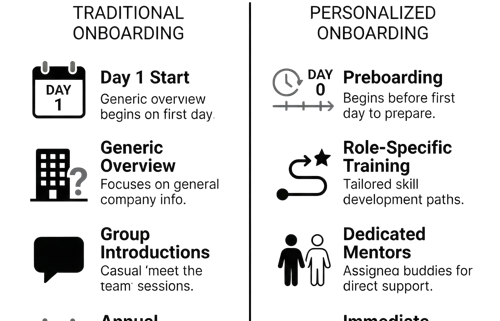
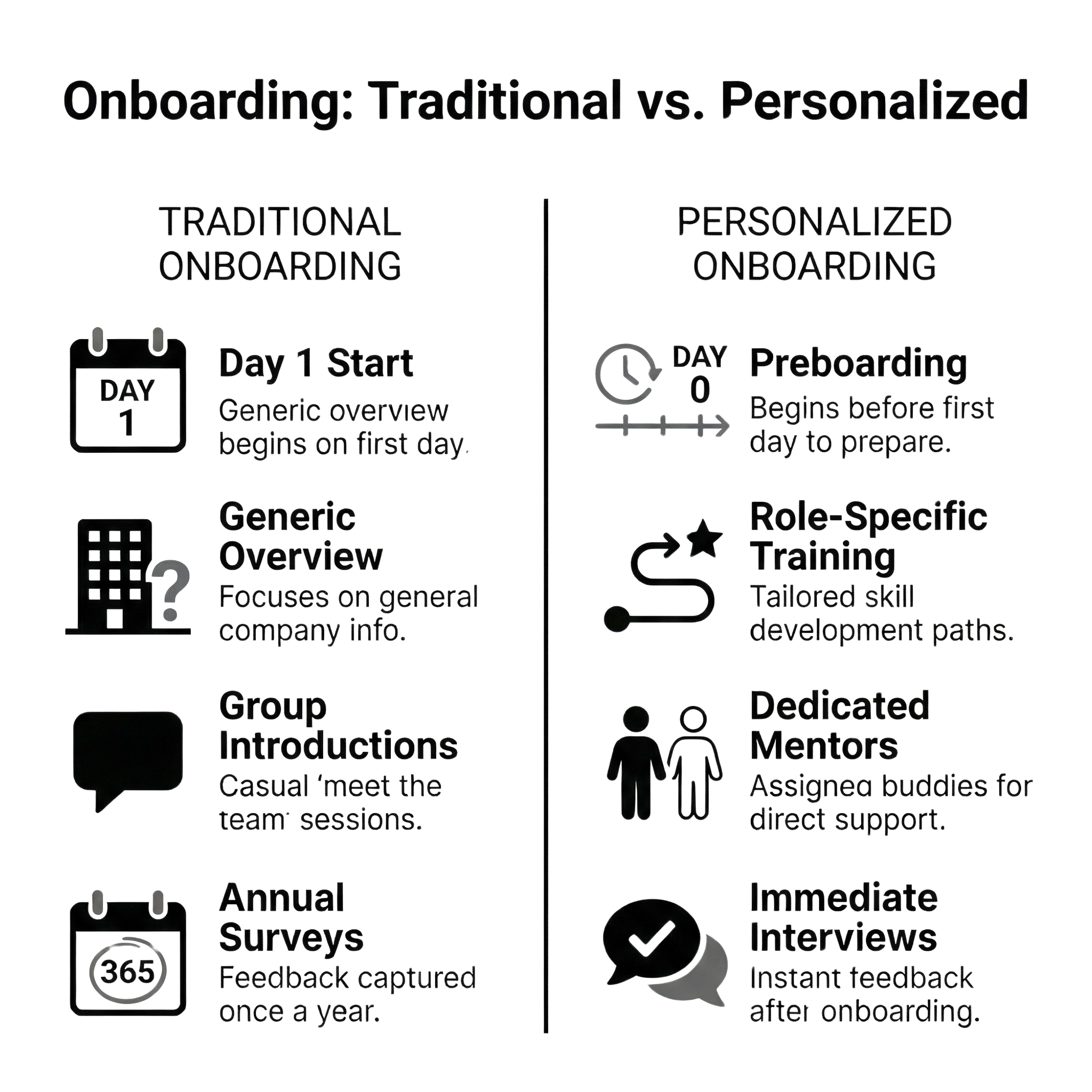
Personalized onboarding is the process of tailoring the first phase of employment to a new hire’s specific role, learning style, and social needs. Instead of a one-size-fits-all approach, it uses preboarding, role-specific training, and mentor integration to ensure employees feel prepared, valued, and culturally aligned from day one.
Need to know
- The Disconnect: Only 12% of employees feel their organization does a great job with onboarding.
- Preboarding is Essential: Start the process before Day 1 to reduce anxiety and signal professionalism.
- Manager Involvement: Personalization fails without active check-ins and structured manager participation.
Feedback Loops: Use immediate post-onboarding surveys to iterate and improve the process.
Why does personalization matter in the hiring process?
A one-size-fits-all program rarely addresses unique job requirements or learning preferences. Personalization strengthens onboarding by ensuring employees receive relevant information and meaningful connections from the outset.
The data supports the need for a shift:
- Only 57% of organizations preboard all new employees (Association for Talent Development).
- Only 29% of employees feel fully prepared to succeed after their initial onboarding (Gallup).
How can you start personalizing onboarding today?
To transform a “check-the-box” activity into a strategic advantage, focus on these five pillars:
- Early Engagement (Preboarding): Reach out before the first day. Share the “small” details—where to park, where to get coffee, or, for remote team members, how to order a standup desk – reduce first-day uncertainty.
- Role-Tailored Content: Speak with current employees to find out what info they lacked when they started. Tailor training materials to support specific role success.
- Active Manager Participation: Require managers to hold scheduled check-ins, specifically at the end of the new hire’s first day.
- Social Integration: Assign “buddies” or mentors to help the new hire navigate company culture and build workplace relationships.
- Continuous Feedback: Don’t wait for an annual survey. Measure the success of each new hire while the experience is fresh.
FAQ: People Also Ask
Who should be in charge of the onboarding process? Confusion over ownership is a major fail-point. Direct managers must be active participants (beyond what HR does) to ensure the social and role-specific aspects of the transition are successful.
When should the onboarding process actually begin? Onboarding should begin the moment the offer is accepted. Preboarding allows the employee to handle administrative tasks and logistics early, so their first day can be focused on culture and connection.
How often should I survey new hires about their experience? Don’t wait for an annual review. It is best to solicit feedback through a survey, immediately after the onboarding phase to capture real-time insights while the experience is fresh.