
Why Should Your Industry or Trade Association Hire an Outside Consultant for Member Surveys?

An independent research consultant helps trade and industry associations get higher response rates, candid member feedback, and credible data the board, management, and staff can act on – by combining guaranteed confidentiality, multimode outreach (phone, email, text, and mail), and the impartiality of a third party who understands association governance.


Important

  • Confidentiality unlocks honesty. Members are far more likely to share real opinions about leadership, dues value, and organizational direction when a neutral third party – not association management – collects the data.
  • Multimode outreach captures the full membership. Most associations blast an email link and call it research. A consultant can reach members how they prefer to communicate – by phone, email, text, and mail, pulling in voices that a single channel misses.
  • Third-party credibility protects the findings. When results come from an impartial firm, they are far less likely to be dismissed – especially on divisive issues like dues increases, policy positions, or leadership performance.
  • Representative data strengthens the association’s voice. Associations exist to speak for an industry, profession, or trade. A methodologically sound survey ensures that voice actually reflects the membership.

Industry and trades

Why Do Most Board- and Management-led Association Surveys Underperform?

Management doesn’t have the same tools as professional researchers, nor can they credibly promise confidentiality. This means low response rates, largely from the most engaged members. The data ends up reflecting a narrow, self-selected slice of the membership – not the broad base the association represents.


How Does Confidentiality Change What Members Are Willing to Say?

Whether it’s fear of embarrassment, or retribution, or something else, members often avoid honest answers on sensitive topics. An outside consultant creates a clear separation between individual responses and association leadership.

The firewall matters on questions that matter most: satisfaction with management/staff performance, perceived value of dues, effectiveness of advocacy efforts, and values alignment.


Why Does Multimode Outreach Matter for Associations?

We all have different communication preferences. Email. Text message. Phone calls. Mail. Choose only one mode and you will limit your responses. Choose more than one or all of them and your participation rate increases dramatically.

Layering these modes closes the gap between engaged insiders and the broader, quieter membership. That distinction matters — boards and staff already know what the engaged members think. The value of a survey is hearing from everyone else.


What Makes a Third-Party Consultant More Credible?

Impartiality removes the most common objection to survey findings: that board leadership or management shaped the questions or the results to support a predetermined conclusion.

You value having a consultant who has direct experience in association governance – understanding board structures, committee dynamics, member segmentation, and the political realities of running a membership organization. That experience produces smarter questionnaire design, analysis, and findings presented in terms the board and management can immediately act on.

All survey results should be assumed to be confidential (for internal use only) unless there is an overt decision otherwise. If there is intention to use data externally, for advocacy / regulatory comments / public testimony (“80% of our membership opposes the new legislation”), or media (“We want to partner with local community colleges to help train the next generation of our trade. An internal survey of our members found near unanimous support for diversifying our workforce.”). Policymakers and journalists scrutinize methodology. Data collected by an independent research firm withstands that scrutiny.


When Should a Trade Association Bring In an Outside Consultant?

When the board or management needs member input they can defend – internally or externally. Common scenarios include:

ScenarioWhy Outside Research Helps
Annual member satisfaction surveysEstablishes a credible benchmark the board can track year over year
Dues increase or restructuringDemonstrates actual member willingness to pay before the board votes
Strategic planningCaptures priorities from the full membership, not just committees
Legislative and regulatory advocacyProduces defensible data for testimony, public comment, and media
Merger or partnership discussionsGauges member sentiment before committing the organization
Event and programming evaluationIdentifies what members actually value versus what staff assumptions

FAQ

Can’t our association manager just run the survey internally?
Yes, they can. And managers have operational knowledge that is invaluable in designing a survey, but whether real or just assumed, they have a stake in the outcome. Members know this. An independent consultant removes that perceived conflict, which is what makes the difference between data the board debates and data the board acts on.

Is this cost-effective for a smaller or regional association?
Maybe. If you are struggling to pay the rent or phone bill, then hiring a professional research firm is not a good idea. The cost often depends on factors like size (number of members) and length of survey (number of questions). You should budget single-digit thousands to tens of thousands.

How long does a professionally managed association survey take?
Most projects run six to eight weeks from questionnaire design through final reporting. The field period – when members are being contacted across all modes – typically lasts three to four weeks.

Probolsky Research is a market and opinion research firm with association, corporate, election, government, and nonprofit clients.


Why Should Your HOA Hire an Outside Consultant for Surveys?

An independent research consultant typically attracts higher response rates, more honest feedback, and credible results that boards can act on with confidence. Combine guaranteed confidentiality, multimode outreach (phone, email, text, and mail), and the impartiality of a third party with real governance experience.


Important

  • Confidentiality drives participation. Homeowners are far more likely to respond – with honest feedback. A neutral third party guarantees anonymity. That is not something you can do internally.
  • Multiple contact modes close the gap. Most homeowners associations rely on a single email blast or newsletter link. A consultant can reach residents by phone, email, text, and mail, possibly even door to door or at organized events, capturing voices that would otherwise be missed.
  • Third-party credibility settles disputes. When results come from an impartial firm – especially one with local governance and board experience – the findings carry weight that a board- or staff- run survey can’t.
  • Better data means better decisions. Higher participation (fully inclusive) and candid responses produce results the board can defend to the full community.

Why Board-led Surveys Might Not Work?

Most association-managed surveys suffer from low response rates and skepticism about how the data will be used. When a board designs, distributes, and tallies its own survey, homeowners reasonably wonder whether their answers are truly anonymous. The outcome is predictable: thin participation, guarded answers, and findings that may not be trusted.


How Does Confidentiality Increase Participation and Honesty?

Homeowners who worry their names are attached to their feedback may soften their responses or skip the survey entirely. An outside consultant creates a clear firewall between individual responses and the board.

That separation changes behavior. Residents often feel more comfortable speaking candidly about association/board/management performance, budget priorities, and amenities – topics they might self-censor on a board-distributed form.

Survey ApproachPerceived AnonymityTypical Impact on Response Quality
Board-run online linkLowGuarded, socially desirable answers
Board-run with “anonymous” labelModerateSome improvement, lingering doubt
Independent consultant-administeredHighCandid, detailed, actionable feedback

Why Does Multimode Outreach Matter?

An email blast or newsletter link only reaches residents who are paying attention at the right moment. An outside research firm deploys multiple contact modes to maximize reach.

Layering contact modes means the survey doesn’t just capture the loudest voices at a board meeting, the most tech-savvy, or those with the most free time. It produces a representative cross-section – which is what we think is the entire point of conducting a survey.


What Makes a Third-Party Consultant More Credible?

Impartiality. When a firm with no stake in the outcome reports results it’s harder to dismiss than the same numbers coming from the board or staff.

Credibility increases further when the consultant brings direct experience in local governance and board operations. A researcher who understands open meeting laws, CC&Rs, and the political dynamics of community associations asks better questions and presents findings with authority.


When Should an HOA Bring In an Outside Research Consultant?

Any time the board needs community input it can defend. Common scenarios include:

ScenarioWhy Outside Research Helps
Annual satisfaction surveysEstablishes a credible baseline the board can track year over year
Budget and assessment decisionsDemonstrates genuine community support (or opposition) before committing resources
Rule or policy changesProvides a view of homeowner sentiment
Community planning (amenities, capital projects)Captures priorities from a representative sample, not just meeting attendees

FAQ

Can’t our management company or staff just run the survey for us?
Yes. But management companies and association staff cannot guarantee full anonymity. If there isn’t budget or interest in hiring an outside consultant. Do it in-house. Some data is better than no data.

Is hiring a consultant cost-effective for a smaller HOA?
Maybe. You can think up a dozen questions and put them in a Google Form and ask your homeowners to respond with a link in the monthly newsletter for free. This risks disenfranchising homeowners who prefer to talk on the telephone, those who don’t trust that their answers are confidential, and those that don’t read your newsletter. If accuracy, inclusivity, and credibility are important, then hiring a research firm is worth it because you cannot achieve these things on your own.

How long does a professionally managed HOA survey take?
Most projects run four to six weeks from questionnaire design through final reporting. If there is a postcard or full mailed survey, allow for at least four weeks. The USPS is understaffed and taking longer to deliver mail.

Probolsky Research is a market and opinion research firm with association, corporate, election, government, and nonprofit clients.
Personalized onboarding: How to build a better welcome for new hires

What is personalized onboarding?

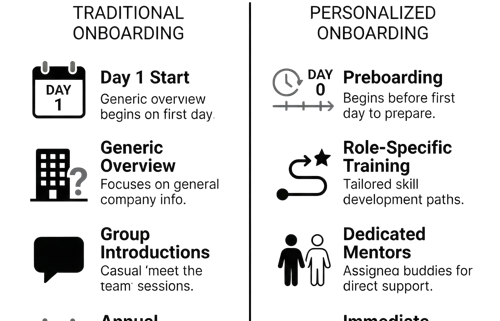
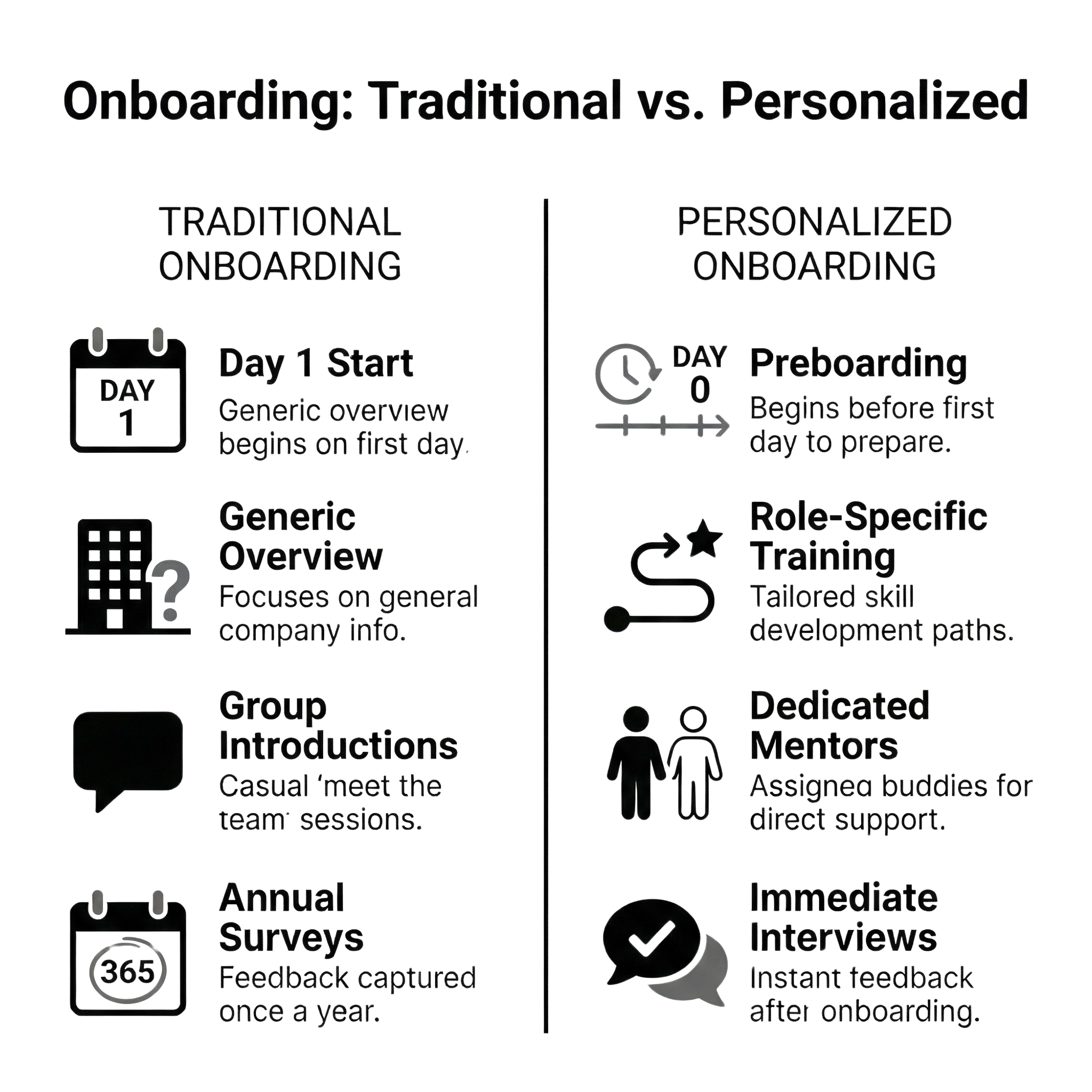
Personalized onboarding is the process of tailoring the first phase of employment to a new hire’s specific role, learning style, and social needs. Instead of a one-size-fits-all approach, it uses preboarding, role-specific training, and mentor integration to ensure employees feel prepared, valued, and culturally aligned from day one.

Need to know

  • The Disconnect: Only 12% of employees feel their organization does a great job with onboarding.
  • Preboarding is Essential: Start the process before Day 1 to reduce anxiety and signal professionalism.
  • Manager Involvement: Personalization fails without active check-ins and structured manager participation.

Feedback Loops: Use immediate post-onboarding surveys to iterate and improve the process.

Why does personalization matter in the hiring process?

A one-size-fits-all program rarely addresses unique job requirements or learning preferences. Personalization strengthens onboarding by ensuring employees receive relevant information and meaningful connections from the outset.

The data supports the need for a shift:

  • Only 57% of organizations preboard all new employees (Association for Talent Development).
  • Only 29% of employees feel fully prepared to succeed after their initial onboarding (Gallup).

How can you start personalizing onboarding today?

To transform a “check-the-box” activity into a strategic advantage, focus on these five pillars:

  • Early Engagement (Preboarding): Reach out before the first day. Share the “small” details—where to park, where to get coffee, or, for remote team members, how to order a standup desk – reduce first-day uncertainty.
  • Role-Tailored Content: Speak with current employees to find out what info they lacked when they started. Tailor training materials to support specific role success.
  • Active Manager Participation: Require managers to hold scheduled check-ins, specifically at the end of the new hire’s first day.
  • Social Integration: Assign “buddies” or mentors to help the new hire navigate company culture and build workplace relationships.
  • Continuous Feedback: Don’t wait for an annual survey. Measure the success of each new hire while the experience is fresh.

FAQ: People Also Ask

Who should be in charge of the onboarding process? Confusion over ownership is a major fail-point. Direct managers must be active participants (beyond what HR does) to ensure the social and role-specific aspects of the transition are successful.

When should the onboarding process actually begin? Onboarding should begin the moment the offer is accepted. Preboarding allows the employee to handle administrative tasks and logistics early, so their first day can be focused on culture and connection.


How often should I survey new hires about their experience? Don’t wait for an annual review. It is best to solicit feedback through a survey, immediately after the onboarding phase to capture real-time insights while the experience is fresh.

4 Internal Communication Mistakes You May Be Making

Internal communication is about building trust, alignment, and a shared understanding. Address these four common mistakes and you will be supporting a communication culture that benefits both employees and the organization’s goals.

When internal communication works, employees are informed, aligned, and engaged. When internal communication breaks down, employees are confused, distrustful, and more prone to errors. 

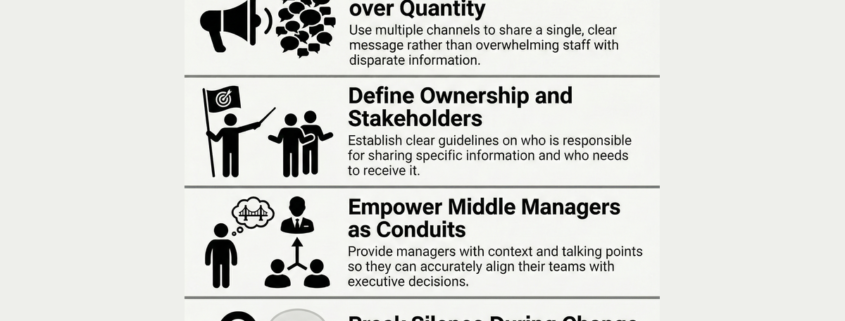
Quantity over quality
Effective messaging strategy is not more = better. 

Unified messages on multiple channels (email, Zoom Chat, quarterly newsletter) are good. Disparate messages can lead to confusion. Don’t make employees track the latest information and identify what is most important. 

The fix: Prioritize clarity over quantity. It is encouraged to send the message through multiple channels to increase awareness, but it should be a singular message. Be intentional about the information being shared and highlight the key takeaways.

Confusing who is responsible
You have a lot of stakeholders. But who owns internal comms? 

Not doing this leads to conflicting information and important stakeholders not receiving the message.

The fix: Create clear communication guidelines and plans that identify a) who is responsible for sharing what information and b) who it needs to be shared with.

Neglecting middle managers
Managers (and directors) can be a great conduit between the executive team and staff, but they often feel ill-informed themselves. This makes their job harder.

The fix: Provide your middle managers with context, talking points, clear rationale behind decisions being made, and give them the opportunity to ask questions. The more informed they are, the more effectively they can share the message accurately and keep their staff aligned.

Staying silent
The surest path to angst and turnover is never talking to your team and making them unsure about the future. If leadership remains silent during times of change like organizational restructuring, new leadership, or shifting priorities, rumors fill the gap.

The fix: Leadership should deliver messages early and with clarity. “We don’t know yet,” is better than saying nothing at all. Be transparent and keep them updated.

The Voter – Policymaker Divide on Water

A poll conducted in November discovered that California voters have a distinctly different view from environmental and political leadership on how to address the future of water.

Dr. Adam Probolsky, president of Probolsky Research presented the poll results at the California Foundation on the Environment and the Economy (CFEE) Water Conference in Indian Wells which included some of the state’s top elected officials and advocacy groups leadership.

Surface storage (dams and reservoirs) are supported by seventy-two percent of voters.

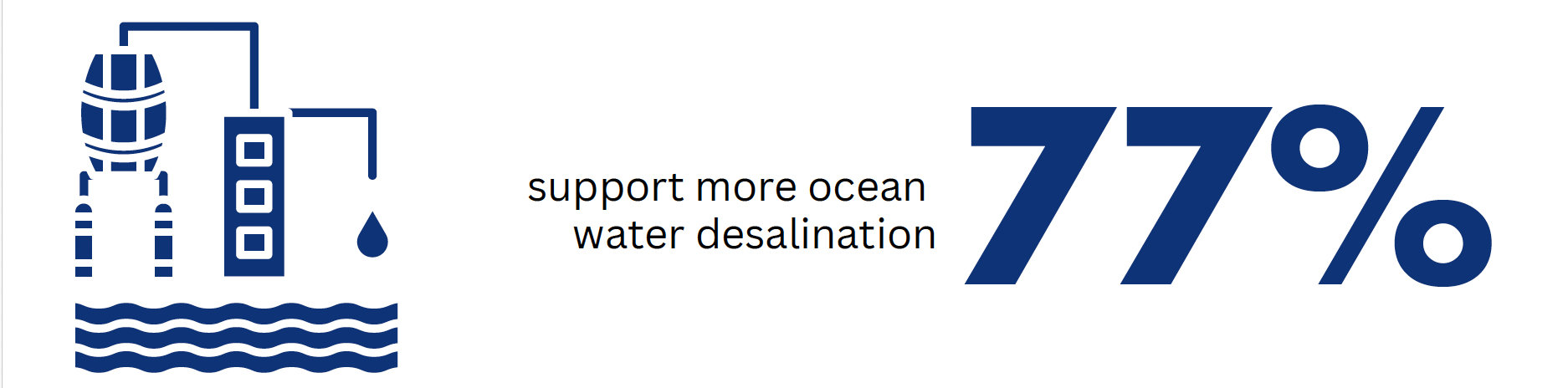
Ocean water desalination is supported by seventy-seven percent of the voters.

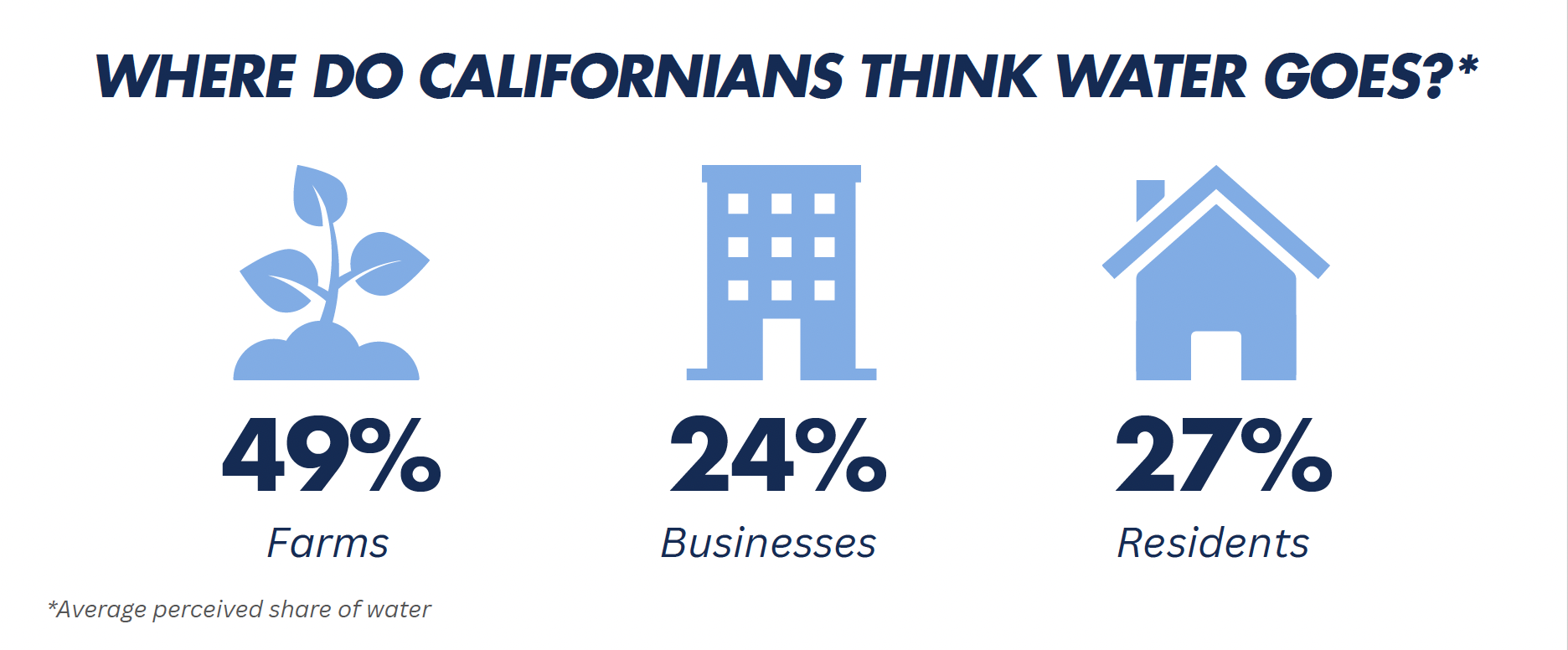
The real number is closer to 80% of the state’s water supply going to agricultural use.

All this adds up to a challenge for the environmental community that is largely opposed to dams and desalination. It may also be an opportunity for supporters of new water infrastructure. They may use these voter sentiments in how they approach funding.

A more complete look at the polling data on water policy can be found here.

Your Inspirational Messaging Is Making People Angry (Here’s What Works Instead)

By Adam Probolsky

Most Americans are not trying to get to the “shining city on a hill.” They can’t see “a thousand points of light.” They do not believe it’s morning in America.” But it gets worse, recent national polling shows that just 54% of us have a positive view of capitalism – it’s down to the lowest point ever measured. The free market is upside down among Democratic voters – they rate socialism higher 66% to 42%. And while Republicans still somewhat hold high the idea of making money, they are in the minority.

Big business is in serious trouble with just 37% support. The companies we buy from, we invest in, that innovate, the companies that make miracle drugs – they are all reviled by most of our 340 million.

This warns of huge implications for the future of Western democracies, but right now communicators need to recognize the moment we are in and adjust their approach. Hint: Ditch your aspirational words for something more demure.


Here are the seven (7) things communicators can do today to filter their message for the malaise we are in

1- Acknowledge systemic failures first – spend time validating that “the system is broken” or “the old ways aren’t working” – people need to hear that you understand their frustration

2- Find your connection to small business (which is put on a pedestal by nearly everyone) – it has to be believable – how you partner with, support, and celebrate them

3- Localize – it’s hard to be upset when you see your hometown water tower on TV, or your high school mascot on the billboard

4- Talk about “getting by” instead of “getting ahead” – swap aspirational language for survival language – focus on “making ends meet, and “keeping your head above water”

5- Frame solutions as “fighting back” rather than “moving forward” – use combative language that positions your audience as justified warriors against unfair systems rather than passive consumers*

6- Emphasize “basic dignity” over “opportunity” – talk about people deserving a fair shot at a decent life, not the chance to climb ladders – focus on fundamental respect rather than advancement

7- Lead with problems, not solutions – spend more time diagnosing what’s wrong than prescribing fixes – people want to feel heard before they want to be helped

Your role has fundamentally changed – stop trying to inspire people who just want to be understood. Communicators who adapt will connect – the ones who don’t will become background noise in a very angry room.

*Use obvious caution with this one.

Dr. Adam Probolsky is president of Probolsky Research and a Senior Research Follow with the Drucker School of Management at Claremont Graduate University.

The Next Step After Conducting an Employee Survey: Turning Results into Action

Every year, millions of employees are asked to fill out surveys. They share their opinions on everything from organizational culture to feedback on their direct supervisor to what training would help them do their job better. But a crucial question often goes unanswered: Does this feedback actually lead to change?

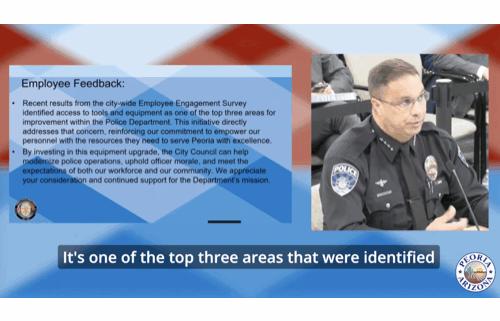
The answer is perfectly illustrated by Peoria, Arizona Police Chief Thomas Intrieri during a recent city council meeting. He was making the pitch for additional funding for the police department and cited how their employee survey found that officers were concerned about equipment. His use of the data to make his point and drive home support from policymakers is a testament to the principles recommended by organizational leadership experts and researchers.

Instead of relying only on anecdotes, Chief Intrieri presented hard data from an employee engagement survey. He pointed to a specific finding, noting that the equipment he was seeking funds for was among the top three concerns expressed by employees. Good staff work and the forethought to have done the employee survey led to a 7-to-0 yes vote for the $884,192 budget adjustment.

Why This Is a Textbook Example of Effective Leadership

It Proves to Employees That They Were Heard

The single most important outcome of a survey is for employees to know their feedback wasn’t ignored. By bringing the item before the city council and publicly citing the survey results, the Chief showed every officer in his department that their collective voice was the foundation of his request. This is the first and most vital step in building trust.

It Turns Subjective Wants into Objective Evidence

A leader’s request for “better equipment” can be dismissed as a routine departmental wish. But a request based on a formal, organization-wide survey becomes a business case – informed by data. It provides decision-makers (like a city council or a management team) with objective evidence to justify allocating funds and making a change.

It Creates a Positive Cycle of Improvement

When employees see a direct line between the feedback they gave and a positive change in their workplace, they become more invested in the organization’s success. They are more likely to participate thoughtfully in future surveys, which provides leaders with even better data. This creates a powerful loop: employees give quality feedback, leadership acts on it, and the organization gets better as a result.

The alternative: It’s easy for employees to feel like their feedback goes into a black box. This can lead to distrust in the process and diminishing response rates to future employee surveys. Don’t let this happen in your organization.

Frequently Asked Questions About Employee Surveys (FAQ)

Q1 Why should an organization conduct an employee survey?

Organizations use surveys to get an honest, confidential look at what’s working and what isn’t from the employees’ perspective. It’s one of the most effective ways to identify hidden problems, measure morale, and find opportunities to improve the workplace. Hint: Using an independent research firm gives assurance to employees that their responses will remain anonymous.

Q2 What is the most important step after a survey is completed?

The most critical step is action. Leaders analyze the results, share them with employees, and demonstrate a clear plan to address the key findings. Even small, visible changes show that the feedback was taken seriously.

Q3 How does acting on survey feedback help a business or organization?

Acting on feedback directly impacts organizational success. It boosts employee morale and engagement, which leads to higher productivity, better customer service, and lower employee turnover. A workplace that listens and responds is a workplace where people want to be.

Dr. Adam Probolsky is president of Probolsky Research, which conducts employee surveys for corporate, government, and nonprofit clients.
California Statewide Voter Poll – Add-on Questions

Unique Research Opportunity: Add Your Questions to Statewide Voter Polls in California

Probolsky Research is conducting a statewide voter poll in California and accepting add-on questions from organizations, advocacy groups, candidates, industry, and researchers. Results will be available first week of September 2025.

Overview of This Unique Polling Opportunity

Probolsky Research is offering organizations the chance to add custom questions to our upcoming statewide voter poll in California. You gain access to statewide polling data that would usually require conducting your own poll.

Poll Details

Sample Size: 900 registered voters
Languages: English and Spanish
Survey Methods: Multimode: online via email and text-to-Web + live interviewing on landline, mobile phones
Margin of Error: +/-3.3% at 95% confidence level
Results Timeline: First week of September 2025

What’s Included

When you add questions to our statewide polls, you receive a complete research package that provides actionable insights and professional presentation materials:

  1. Comprehensive Data Analysis Presentation

Top-line Results: Clear, straightforward answers to your questions with percentage breakdowns

Cross-tabulations: Detailed analysis showing how different demographic groups (age, gender, party affiliation, geographic region, etc.) responded to your questions

Open-ended Question Analysis: If your questions include open-ended components, we provide thematic analysis and categorization of responses

  1. Professional Media Support (Optional)

Custom media release highlighting key findings from your questions
Media availability with our research team to discuss results

  1. Complete Confidentiality Protection

Your participation and specific questions remain confidential
You control all aspects of how and when your results are shared publicly

Pricing

$2,400 per question (Multi-question discounts available)

Participating in our statewide polling opportunity is straightforward and designed to accommodate your organization’s specific research needs and timeline.

Step 1: Question Development and Consultation – contact our team to discuss your research objectives and question development.
Step 2: Question Finalization and Reporting – once your questions are finalized, we discuss reporting format preferences and earned media support (if requested)
Step 3: Poll Conducted
Step 4: Results Delivery and Analysis

Receive your complete results package during the first week of September, including all analysis, cross-tabulations, and presentation materials.

About Probolsky Research

Probolsky Research is a national nonpartisan, Latina, and woman-owned market and opinion research firm.

Contact: Adam Probolsky
Phone: (800) 492-9556
Email: info@probolskyresearch.com

𝗪𝗵𝗲𝗻 𝗕𝘂𝘀𝗶𝗻𝗲𝘀𝘀 𝗮𝗻𝗱 𝗚𝗼𝘃𝗲𝗿𝗻𝗺𝗲𝗻𝘁 𝗜𝗻𝘁𝗲𝗿𝘀𝗲𝗰𝘁, 𝗜𝘁’𝘀 𝗖𝗮𝗹𝗹𝗲𝗱 𝗣𝘂𝗯𝗹𝗶𝗰 𝗔𝗳𝗳𝗮𝗶𝗿𝘀

Most people do not understand public affairs, so Dr. Adam Probolsky wrote this primer:


/// Many executives are great at business, but uninformed about public affairs and political risk because they have never had to know how to navigate government

/// The need to engage with government is extending to broader groups of industries – to head off or fix a problem / or for prospective opportunities

/// There is a public affairs approach that successful companies use and can be adopted to great effect, just ask, any public affairs professional can share the typical roadmap

/// This is not comms, lobbying, marketing, market research, or PR – public affairs has elements of all of them, but don’t assume your existing team can “just handle it”

/// Public affairs practitioners have worked in politics or possibly government – there is no secret sauce, but when you have a heart attack, you want the board-certified cardiologist, not the school nurse – the same goes for public affairs

/// It may sound unoriginal, but the first step is to get a strong consulting team in place

/// 99% of public affairs happens at the state and city/county level, it’s not always as exciting or sexy as what happens nationally

Probolsky Research partners with consultants that operate in the public affairs space. We love collaborating. We love winning.

Politics ≠ Political

Local government staff have a dual role – their functional job and the job of keeping their residents happy. No one else has to work under those condition. Sure, corporate executives answer to shareholders, but not with the intensity and proximity that residents have to City Hall.

Yet many agencies instruct staff to leave politics outside the building – not just their personal politics. My new piece for the International City/County Managers Association (ICMA), “A Strict Politics – Policy Divide Is Holding Your Agency Back,” shows why limiting staff’s ability to watch and consider the politics of the day is bad for the agency.

The article explains how politics works as an early warning system.

I outline a routine that requires no extra headcount: track narrative shifts, assign a lead, and circulate a one-page memo each week. This way staff gain situational awareness.

Probolsky Research follows the same approach when guiding agencies through surveys, focus groups, and message testing. We help staff see the story behind the numbers, then translate that story into policy choices that withstand public scrutiny.

Read the full article on the ICMA blog: https://icma.org/blog-posts/strict-politics-policy-divide-holding-your-agency-back.

Or read it here:

A Strict Politics–Policy Divide Is Holding Your Organization Back

If your organization is facing a political threat, you do not fight it with silence—you fight it with strategy.

By Dr. Adam Probolsky, president of Probolsky Research and senior research fellow with Claremont Graduate University’s Drucker School of Management

I have yet to meet a local government staff member that could not read the room. But when their hands are tied behind their backs—told to avoid politics at all costs—they are not operating at peak performance. Staff are not confused about the differences between political and public policy disciplines. They understand the unique dynamics between thinking politically and acting politically.

They know it means anticipating what might trigger backlash before it shows up on an agenda.

For example, flagging a new fee before it appears on an agenda where activists are likely to label it a “tax” is thinking politically and giving everyone involved the opportunity to prepare. Staff are not going to seek an endorsement of the fee from the local county party chairman.

Politics is about power: getting it, keeping it, and using it to win. Public policy is about outcomes: what laws, regulations, or programs actually say and do. The two often intersect. Both are grounded in research, data, and stakeholder input—we hope.

Politics as an Early Warning System

What is often overlooked in the public policy realm is the anticipatory value of politics.

Political systems theory frames politics as a connected feedback loop. Citizens express needs and preferences (inputs) through elections, political speech in all its forms, and media consumption patterns. Politicians interpret those signals and attempt to translate them into public policy (outputs). When expectations are not met, the public responds through disengagement, outrage, or votes.
 

What This Means for Staff

Staff’s focus on statutory obligations or program design is important. But dismissal of the broader political environment is causing your agency to miss early signals of change. This is not about partisanship. It is about situational awareness. Politics can tell us what people believe is happening, even if it is not true.

Staff may pride themselves on evidence-based thinking, but politics operates on emotion, identity, and perception. Research in behavioral science consistently shows that people make judgments based on recent, vivid events, not long-term data. Policy professionals who do not account for this disconnect risk being right but irrelevant, sharing the truth but still losing trust.
 

Monitoring, Not Reacting

The answer is not for staff to become political operatives. It is to treat politics like a real-time sensor network. This means tracking the origin of negative public comments—sometimes valid concerns, sometimes personal frustration. Monitoring social media not just for sentiment, but for narrative shifts. Knowing which local or regional issues are heating up, even if they are not “yours” yet.
 

Taking Action

Every public agency needs a top-down directive that makes caring about, learning about, and strategizing over politics’ impact on local policy the norm, not a taboo activity to be hidden.

Having a clear, consistent approach to tracking the political environment does not require a new hire. It requires assigning responsibility and making political awareness part of normal operations.

That might mean:
 

  • Reading statewide and regional political blogs, not just waiting for association updates.
  • Monitoring legislative agendas and committee activity, not just relying on lobbyist summaries.
  • Watching for local versions of national debates before they surface at your public meetings.
     

This work can live within your public affairs or public information offices, or be assigned to a management analyst intern. The point is: it needs to be someone’s job, and everyone’s shared awareness.

Consider creating a short political signals memo. Think one page, once a week. No spin, just intelligence. A few bullet points on:
 

  • Community sentiment shifts.
  • Stakeholder activity worth watching.
  • Viral local issues or narratives.
  • Legislative developments that could ripple your way.
     

Some agencies already have a version of this, but keep it confined to the executive team. That is a mistake. Siloed awareness delays coordinated response. Bring a broader group into the picture. Give them the foresight they need to avoid surprises and plan smart.

This is not about playing into the headlines. It is about anticipating impact. The goal is to be aware. Strategic. Less reactive.

Politics is not always rational. But it is rarely random. People expressing fear, anger, or distrust are data points. If your agency is facing a political threat, you do not fight it with silence, you fight it with strategy.