
4 Internal Communication Mistakes You May Be Making
Internal communication is about building trust, alignment, and a shared understanding. Address these four common mistakes and you will be supporting a communication culture that benefits both employees and the organization’s goals.
When internal communication works, employees are informed, aligned, and engaged. When internal communication breaks down, employees are confused, distrustful, and more prone to errors.
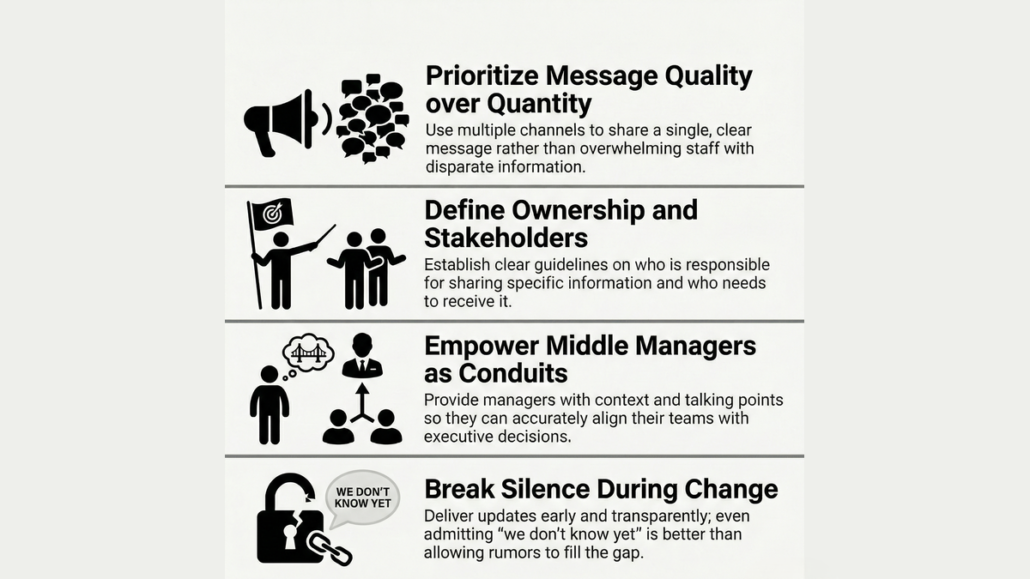
Quantity over quality
Effective messaging strategy is not more = better.
Unified messages on multiple channels (email, Zoom Chat, quarterly newsletter) are good. Disparate messages can lead to confusion. Don’t make employees track the latest information and identify what is most important.
The fix: Prioritize clarity over quantity. It is encouraged to send the message through multiple channels to increase awareness, but it should be a singular message. Be intentional about the information being shared and highlight the key takeaways.
Confusing who is responsible
You have a lot of stakeholders. But who owns internal comms?
Not doing this leads to conflicting information and important stakeholders not receiving the message.
The fix: Create clear communication guidelines and plans that identify a) who is responsible for sharing what information and b) who it needs to be shared with.
Neglecting middle managers
Managers (and directors) can be a great conduit between the executive team and staff, but they often feel ill-informed themselves. This makes their job harder.
The fix: Provide your middle managers with context, talking points, clear rationale behind decisions being made, and give them the opportunity to ask questions. The more informed they are, the more effectively they can share the message accurately and keep their staff aligned.
Staying silent
The surest path to angst and turnover is never talking to your team and making them unsure about the future. If leadership remains silent during times of change like organizational restructuring, new leadership, or shifting priorities, rumors fill the gap.
The fix: Leadership should deliver messages early and with clarity. “We don’t know yet,” is better than saying nothing at all. Be transparent and keep them updated.